First Year
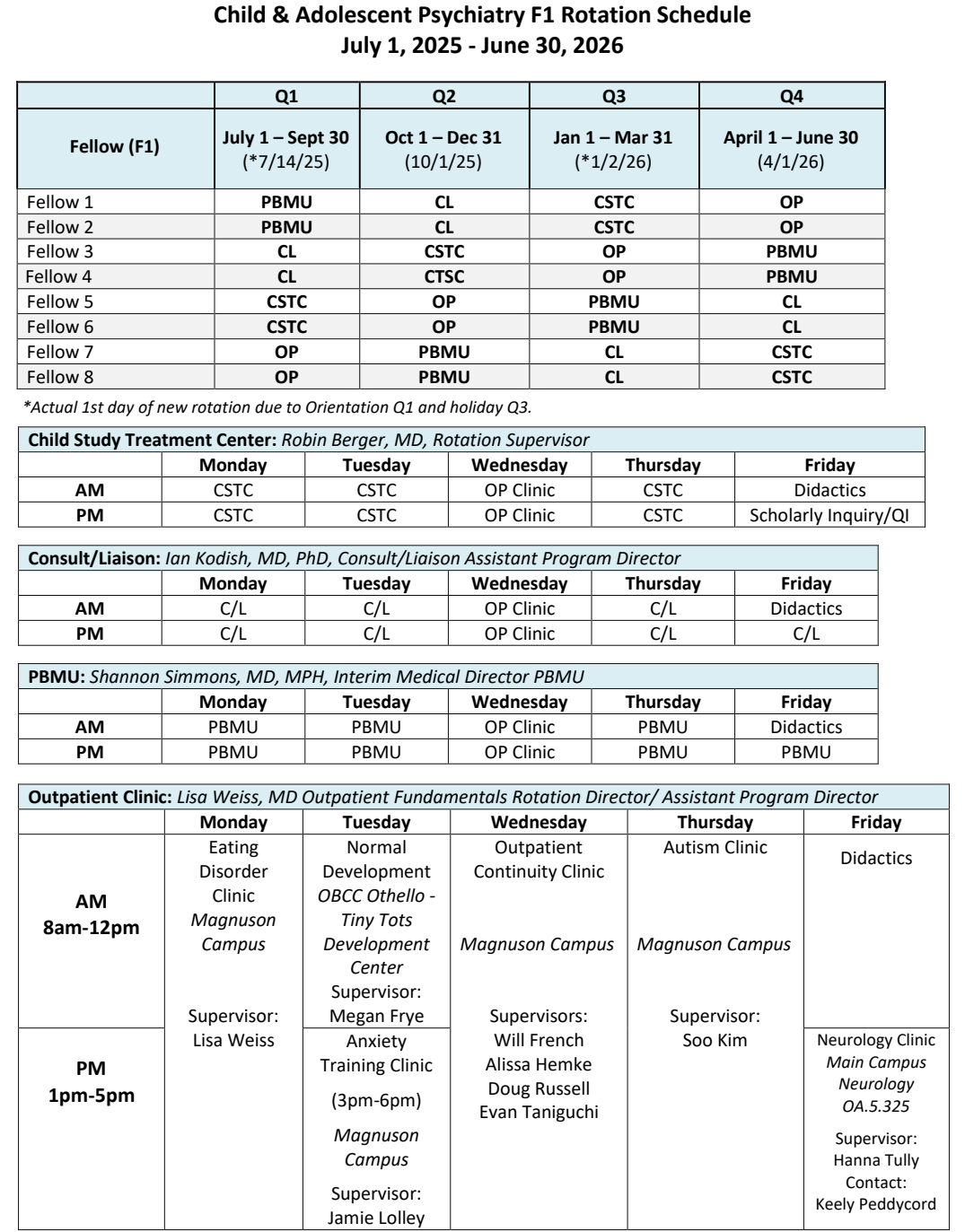
The 1st year of the 2-year Child and Adolescent Psychiatry Residency is divided into four blocks, each of 3 months duration. For a full description of the Seattle Children’s Hospital and CSTC, including individual departments, units and specialty services, please refer to our Training Sites page.
The F1 rotations are as follows:
Fellows work on a team with an attending psychiatrist, mental health therapist, case manager and often psychiatry/psychology residents and rotating medical students. Fellows work from Monday through Friday, with the exceptions of a full day of continuity clinic on Wednesdays and protected time for didactics on Friday morning. Fellows work with youth from ages 3 to 17, dealing with a wide range of acute psychiatric disorders or behavioral problems. With some variation, fellows can usually expect a caseload of 4-6 patients, with supervision provided by an attending child and adolescent psychiatrist. Fellows gain experience in short-term psychotherapy, medication management, facilitating family meetings, acute behavioral management, safety planning, and working on a multidisciplinary team. Fellows participate in safety huddles, multidisciplinary didactics and case conferences.
The child psychiatry consult service is composed of a multidisciplinary team of psychologists, psychiatrists, trainees (psychology residents and CAP fellows) consulting to various medical services within SCH. Fellows rotate for a full day on Monday, Tuesday, Thursday, and Friday (afternoon only). Common referrals include patients with challenges in coping with chronic illnesses or long-term hospitalization, mood and anxiety disorders associated with medical illnesses, eating disorders, conversion disorders, delirium, iatrogenic reactions such as medication-induced mood disorders, safety evaluations following suicidal behaviors or significant noncompliance, and consultation to our emergency room mental health staff. Fellows also work with youth exhibiting lack of adherence to their medical care, aggression, and other behavioral issues on medical and surgical units.
All first year fellows spend three months rotating at CSTC, on Mondays, Tuesdays, and Thursdays. The Seattle Children’s continuity clinic is on Wednesdays, and didactics and scholarly enquiry time on Fridays.
Fellows will be assigned to a primary cottage team (San Juan cottage – High School age, and Ketron Cottage – Middle School age) where they have a chance to act as the primary psychiatrist for 2-6 youth, and take on two supervised individual therapy cases. There are many other learning opportunities, including milieu and recreational therapy, forensic services (competency assessment and restoration), and an interdisciplinary didactic curriculum. See the CSTC site information page for more information.
Monday:
- Eating Disorders Clinic: Fellows perform initial evaluations for children and adolescents with eating disorders. Fellows also participate in various treatment modalities for eating disorder including meal support classes, family based treatment and CBT interventions.
Tuesday:
- Mornings are spent in the Typical Development rotation: Fellows attend a daycare center doing observation of normative development. Typical developmental milestones are reviewed with a supervisor.
- Afternoons are spent in Anxiety Training Clinic. Fellows participate in intakes for anxiety clinic, participate in individual CBT/exposure therapy sessions and co-lead anxiety groups for youth and parents.
Thursday:
- Autism Center: Fellows work in the medication management, biobehavioral/RUBI (parent training) and diagnostic testing (ADOS) clinics within the Autism Center. Fellows also participate in weekly teaching rounds with Dr. Soo Kim at the Autism Center.
Friday:
- Afternoon Pediatric Neurology Clinic: Fellows train in the SCH general pediatric neurology clinic. Common presenting concerns include seizure disorders, movement disorders, metabolic diseases affecting the nervous system, congenital anomalies of the brain and spinal cord and neuro-oncologic problems. Fellows refine their neurologic evaluation and examination skills in the pediatric population.
Fellows have their continuity training clinics on Wednesdays throughout both years of training. This clinic offers fellows a chance to experience long-term continuity care with both weekly therapy patients and medication management cases that are seen less frequently. Fellows also have 1 hour of medication management supervision and 1 hour of CBT psychotherapy supervision each Wednesday built into their clinic schedules.
Second Year
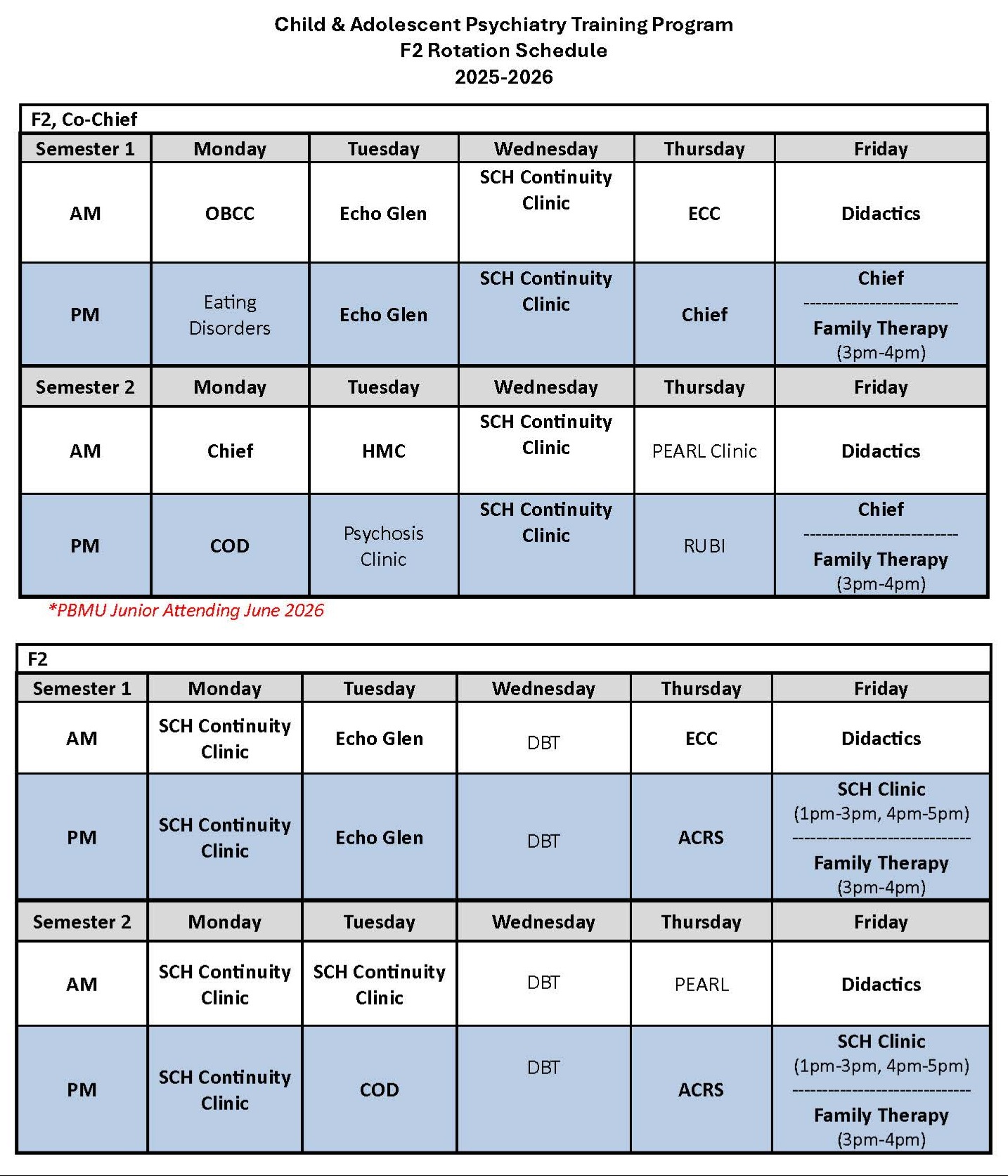
During the 2nd year, residents continue their outpatient care clinic with an emphasis on long-term care. The second year is divided into two 6-month long blocks. Approximately 2 days per week are used for elective time, which is designed to further enhance or develop their skills in areas consistent with their career goals.
Required rotations include:
Half a day per week for 6 months. May elect to do a full year.
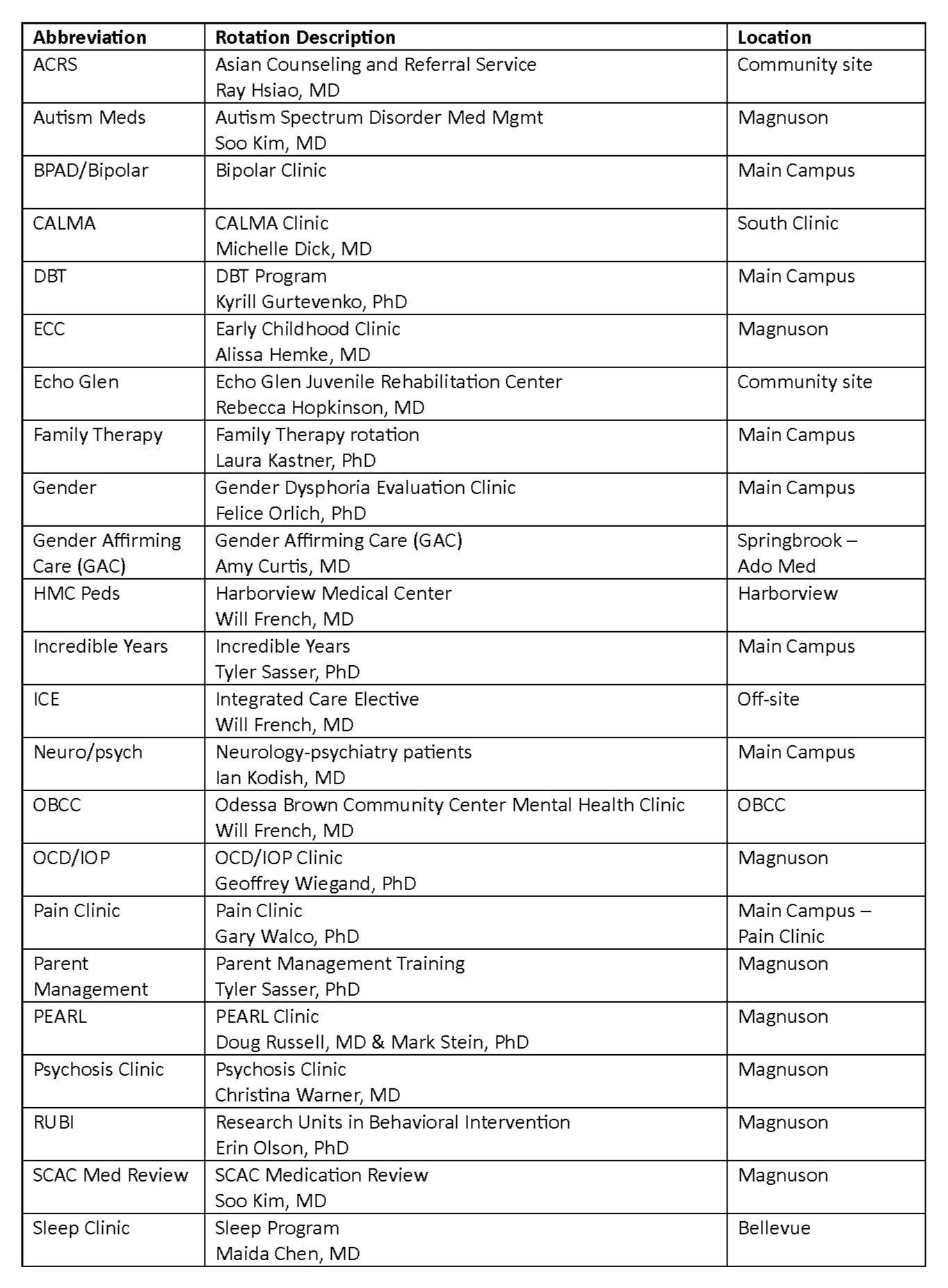
- Fellows rote in the Co-Occurring Disorders Clinic at SCH where they work with Dr. Ray Hsiao (Program Director). COD clinic treats patients with co-occurring substance use disorders and other psychiatric disorders (mood disorders, ADHD, etc). Fellows gain experience in motivational interviewing, practice substance use evaluation skills, and learn about different models of care in addiction medicine. The COD clinic also offers individual therapy focusing on short-term, cognitive behavioral therapy, individual parent training using Community Reinforcement and Family Training (CRAFT) and psychiatric consultation regarding medication management for substance use cessation.
Half a day per week for 1 year.
- Choices include the Child and Adolescent Latino Mental Health Assessment and Treatment (CALMA) Clinic, Asian Counseling and Referral Services, Harborview Medical Center Pediatrics Clinic, or the Odessa Brown Children’s Clinic.
- Please see our Training Sites page for a further description of each community partner.
1 day per week for 6 months.
- Echo Glen Children’s Center is a juvenile justice residential rehabilitation center for boys (ages 11-16) and girls (ages 11-21). Child psychiatry and general psychiatry residents provide psychiatric evaluations, psychiatric medication management and psychotherapy for youth at Echo Glen as part of their forensic psychiatry training. Additional training experiences include engaging youth and families, collaborating with health care and cottage staff, and addressing system of care issues. A year-long didactic covers general child psychiatry and effective juvenile justice practices.
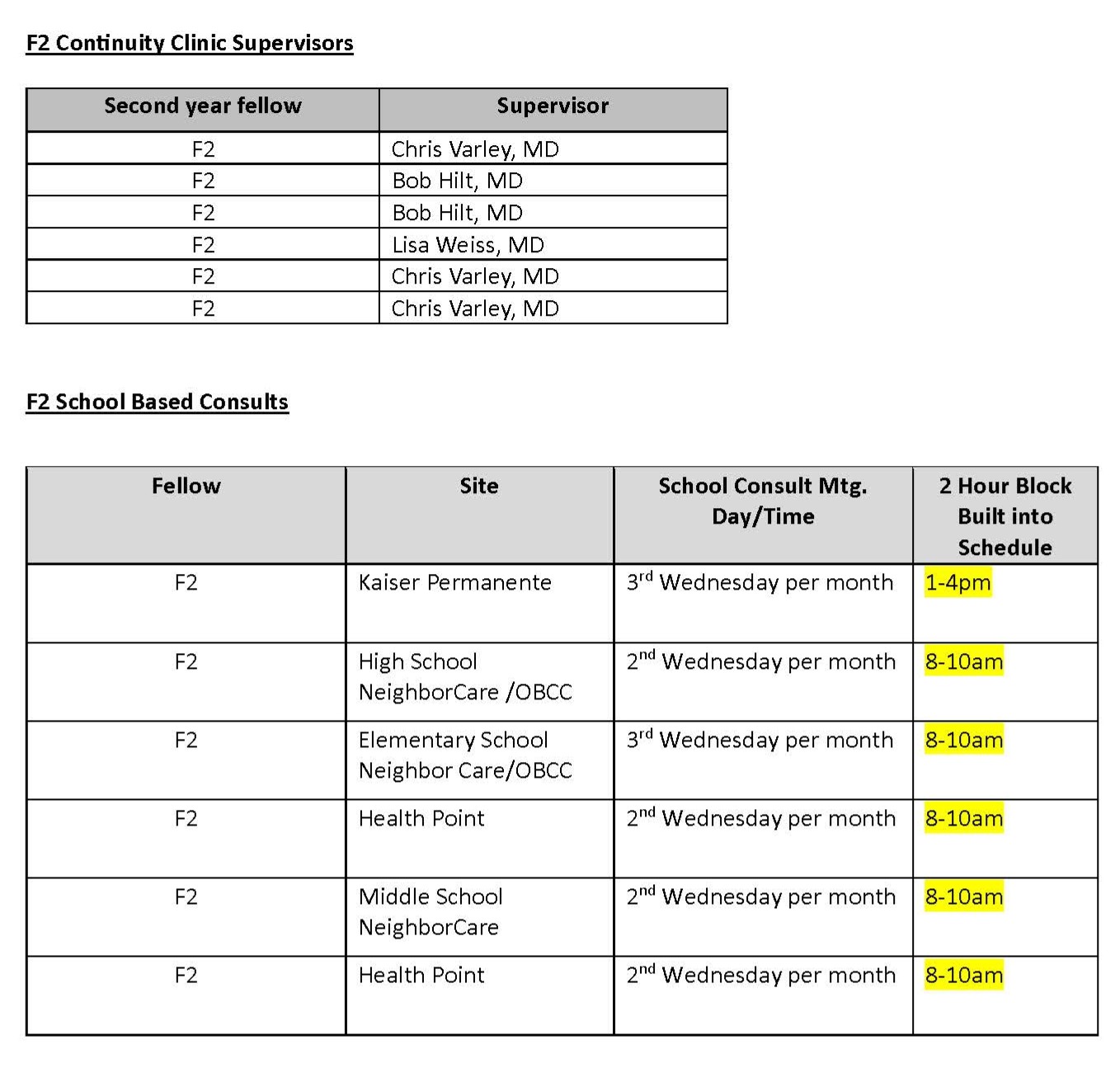
Fellows provide 1 morning a month of consultation to two or more of over a dozen Seattle school-based mental health clinics.
- The School-Based Health Clinics/Reaching for Excellence Project collaborates with Public Health — Seattle & King County. During their second year of training, Fellows collaborate with psychology faculty members to provide once monthly in person or remote consultation to school-based health center clinicians located on site at more than 20 Seattle-area public elementary, middle, and high schools. In addition to consultation on specific cases, fellows provide education to these providers regarding evidence-based medication and non-medication therapies. For fellows who provide remote consultation, it is highly recommended that they arrange at least one on-site visit to a school during the course of their academic school-year long rotation.
Half a day per week for 6 months.
- The Early Childhood Clinic is a specialty clinic within Psychiatry and Behavioral Medicine for babies and children age 5 or younger who have disruptive behavior, anxiety, sleep problems, neurodevelopmental problems, exposure to alcohol or drugs, or behavior challenges along with a medical condition or health problem. Along with psychiatric/psychological evaluations, fellows participate in medication evals, PCIT and other treatment interventions for children with medically and behaviorally complex problems.
Electives include research activities, additional outpatient or inpatient clinical training, administration and teaching opportunities, or community consultations. Generally, two of the Fellows are chosen as Chiefs in the 2nd year.
Our electives typically include:
- Alaska Away Rotation
- Autism Center: Outpatient Medication Management Clinic
- Autism Center: Mood & Anxiety Clinic
- Autism Center: Biobehavioral Clinic (Parent Training Program)
- Autism Center: Gender Clinic
- Autism Center: RUBI (Research Unit in Behavioral Interventions) – Parent Training Program for children with ASD
- Sleep Medicine Clinic
- Early Onset Psychosis Clinic
- CALMA Clinic (SCH) –– see above
- Co-Occurring Disorders Clinic (COD)
- Dialectical Behavioral Therapy
- Eating Disorders Clinic
- Family Therapy
- Integrated Care Elective (ICE)
- Incredible Years (Parent Training Program for ADHD)
- Junior Attending – Consult Liaison
- Junior Attending – PBMU
- Neurodevelopmental Disorders (Track)
- Neuropsychology Testing / Concussion Clinic
- Pain Clinic
- PAL (Partnership Access Line)
- PEARL Clinic (ADHD specialized clinic)
- Pediatric subspecialty clinics (oncology, cardiology, etc.)
- Research (Required proposal and funding)
- STAND Program (for teens with ADHD & Behavioral Issues)
- Telepsychiatry